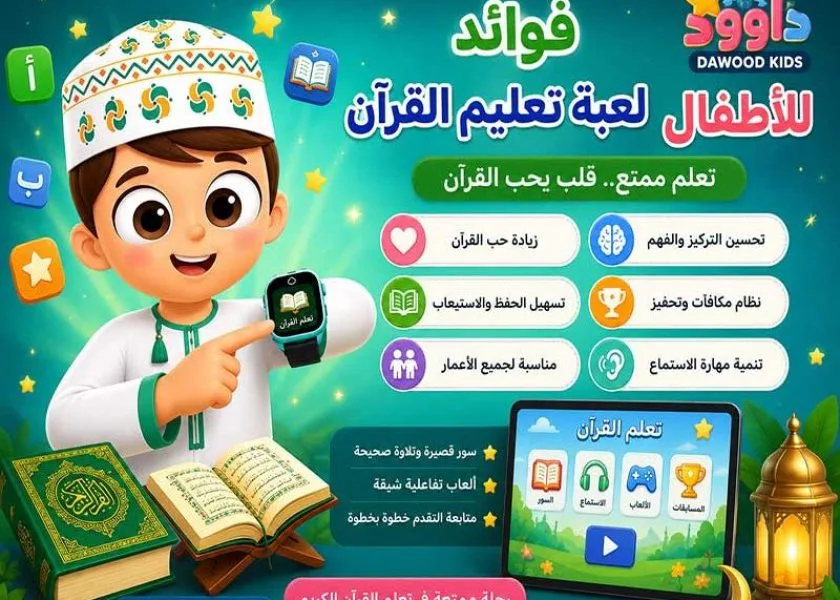
Teaching the Holy Quran to children is one of the important responsibilities of parents. It helps introduce Islamic values and build a connection with the Book of Allah from an early age. As technology continues to develop and children become more familiar with smart devices, Quran learning games for kids offer an educational approach that can combine learning, interaction and enjoyment.
Age-appropriate Quran games and activities can encourage children to listen to Quranic verses, repeat them and revise what they have learned. In this article, we explore the main benefits of Quran learning games for children and how parents can use educational games and apps to support their children's Quran learning journey.
Why Is Learning Through Play Beneficial for Children?
Children learn through exploration, experience and interaction with the world around them. Play can therefore be an effective way to support learning, especially when activities are suitable for a child's age and abilities.
When Quran learning is combined with educational games and interactive activities, children may become more engaged and interested in learning instead of relying only on traditional repetition and instruction.
Learning through play can help support several important skills:
- Encouraging active participation in educational activities.
- Making repetition and revision more varied.
- Developing attention and concentration.
- Building confidence and a sense of achievement.
- Making learning time more enjoyable.
10 Important Benefits of Quran Learning Games for Kids
1. Building a Love for the Holy Quran
One of the main benefits of Quran learning games for kids is that they can help create positive learning experiences. When children enjoy Quran-related activities and receive encouragement as they make progress, they may become more interested in listening to the Quran, learning Surahs and revising what they have memorized.
With regular practice and parental encouragement, Quran learning can become a meaningful part of a child's daily routine.
2. Improving Focus and Attention
Some educational games require children to pay attention to sounds, pictures or instructions and choose the correct answer. These activities give children opportunities to practice concentration, follow instructions and complete tasks step by step.
Attention is an important skill when children listen to Quran recitations, practice memorization and revise verses.
3. Making Surah and Verse Memorization Easier
Educational games can make Quran revision more varied by dividing content into smaller sections and presenting it through different activities. Repeated listening and regular practice can support memorization, while allowing children to learn at their own pace.
It is best to combine educational games with listening to accurate recitations and reviewing learned verses with a parent or teacher.
4. Developing Listening Skills
Listening regularly to clear Quran recitations helps children become familiar with Quranic words, verses and pronunciation. It can also encourage them to pay attention to the sounds of Arabic letters and the way verses are recited.
However, learning Tajweed and developing accurate pronunciation require guidance and correction from a qualified person. Games alone should not be relied upon for this purpose.
5. Increasing Motivation to Learn
Different activities, challenges and positive encouragement can make children more enthusiastic about participating in learning. Parents can also use simple rewards, such as praise or stickers, to recognize their children's efforts and encourage them to continue.
Rewards should be used as a way to encourage learning, rather than becoming the main reason for learning the Holy Quran.
6. Building Self-Confidence
When children learn a new Surah or successfully complete an educational activity, they experience a sense of achievement and confidence in their ability to learn. Recognizing their efforts and encouraging them to keep trying can help develop a positive attitude toward learning.
7. Learning at Flexible Times and Places
Educational apps allow children to access certain activities at home, while travelling or during free time, depending on device availability and the required internet connection. This gives families more flexibility when organizing listening, learning and revision sessions.
Parents should set suitable screen-time limits and maintain a healthy balance between digital learning, family activities and reading together.
8. Encouraging Independent Learning
Simple and clearly designed activities can help children choose an activity and repeat it when needed. With parental guidance, children can gradually learn to take responsibility for part of their learning and revision routine.
9. Developing Thinking and Memory Skills
Quran learning games can include different educational activities, such as:
- Recognizing the names of Surahs.
- Listening to verses and repeating them.
- Matching words or pictures related to an activity.
- Answering age-appropriate educational questions.
- Following instructions and arranging activity steps.
These activities give children opportunities to practice remembering, observing and thinking while learning about the Holy Quran.
10. Encouraging Family Participation
Parents can take part in their children's learning by listening to Quranic verses together, reviewing learned Surahs and celebrating each achievement. Families can also set aside time for reading and revision, helping children see Quran learning as a positive activity they share with their loved ones.
How to Choose the Right Quran Learning Game for Your Child
Before choosing a Quran learning game or app for children, consider the following features to help ensure a suitable learning experience:
- Easy to use: A simple and clear interface suitable for the child's age.
- Accurate Quranic content: Check the accuracy of the Quranic text and recitations.
- Variety of activities: Different ways to listen, repeat and learn.
- Age-appropriate content: Activities that match the child's abilities and learning level.
- Positive encouragement: Motivational features that support learning without creating pressure.
- Digital safety: Review the app's content, settings and the way children use it.
Why Do Parents Choose Quran Learning Apps for Kids?
Educational apps can provide varied content that complements learning with parents and teachers. They give children opportunities to listen, repeat and interact with educational activities while helping families introduce different approaches to Quran learning.
However, parental involvement, guidance and supervision remain important to ensure children benefit from educational content in a balanced and appropriate way.
Dawood Kids: An App and Educational Content for Quran Learning
Dawood Kids combines Quranic content with games and educational activities to encourage children to learn and interact in ways that suit their interests.
The app offers different modes for listening to and revising Quranic verses, including:
- Normal Mode: For listening to and following Quranic verses.
- No Repetition Mode: For listening without the usual verse repetition.
- Memorize Mode: To support memorization practice and verse revision.
The app also supports Arabic and English and brings together Quranic content, games and educational activities. Parents can combine app use with family listening sessions and daily revision to make the Quran learning journey more varied and enjoyable.
Tips for Parents to Get the Best Results
- Set aside daily learning time that suits your child's age and attention span.
- Encourage your child with positive words whenever they make progress.
- Celebrate small and big achievements.
- Take part in some Quran-related activities with your child.
- Combine educational apps with reading and listening together as a family.
- Avoid forcing children to learn for long periods.
- Focus on building a positive and lasting relationship with the Holy Quran.
Conclusion
Quran learning games for kids offer an interactive approach that can make learning more enjoyable and varied. Through listening, repetition, educational activities and positive encouragement, these games can support children's memorization, concentration and listening skills while encouraging an interest in the Holy Quran.
By choosing reliable, age-appropriate educational content and taking an active role in the learning process, parents can make Quran learning a meaningful part of their children's daily lives.
Dawood Kids – An app and educational content for Quran learning.
Frequently Asked Questions About Quran Learning Games for Kids
Do Quran learning games help children memorize the Quran?
Educational games can support memorization through listening, repetition and interactive activities. The best results come from regular revision and guidance from parents or teachers.
What is the right age for children to use Quran learning games?
Simple Quran-related activities can be introduced at an early age. The content and method should be chosen according to the child's age, abilities and readiness to learn.
How much time should children spend learning the Quran each day?
Families can begin with short sessions that match the child's attention span and gradually adjust the duration according to age and interest. Consistency is more important than making sessions too long.
Can educational games replace a Quran teacher?
No. Games and apps are supporting educational tools, but they cannot replace the role of parents and teachers, especially when it comes to correcting recitation and teaching Tajweed rules.
What should parents look for in a Quran learning app?
Parents should check the accuracy of Quranic content and recitations, the suitability of activities for the child's age, ease of use, and the app's safety and privacy settings.



Customer reviews
No reviews
Write your review
Your comment will appear after it is reviewed and approved.