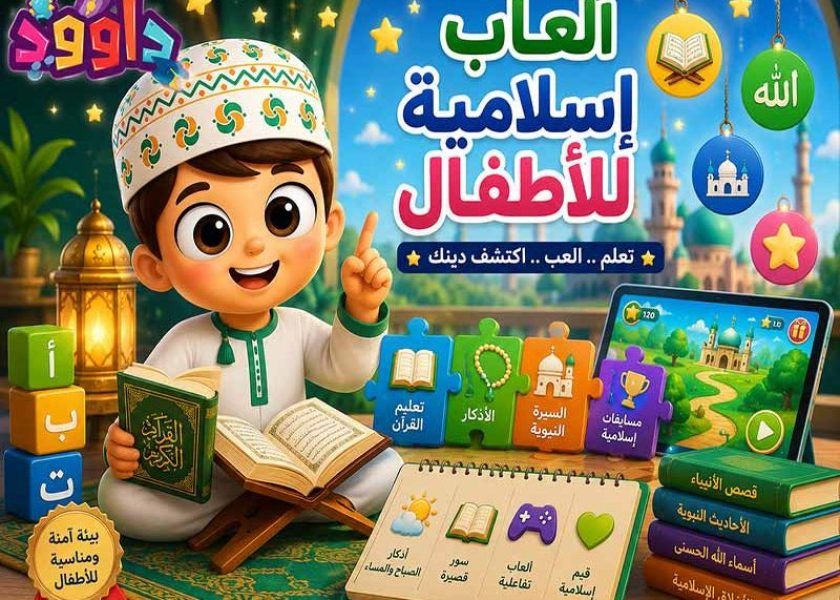
Educational games have become an effective way to combine entertainment and learning, especially when their content is appropriate for a child's age and uses engaging educational activities. Islamic games for kids introduce religious concepts and positive values in a simple and enjoyable way that matches children's curiosity and interests.
Through games, stories and interactive activities, children can explore the Holy Quran, Arabic letters and Islamic stories while learning important values such as honesty, cooperation and respect.
Why Do Parents Choose Islamic Games for Kids?
Parents want their children to spend their screen time in a meaningful way. Carefully selected Islamic educational games can be a useful option because they can:
- Combine learning and entertainment in an age-appropriate way.
- Introduce children to Islamic concepts and values from an early age.
- Encourage children to listen to and explore the Holy Quran.
- Develop curiosity and a love of learning.
- Provide purposeful content that avoids material unsuitable for children.
Benefits of Islamic Games for Children
1. Developing a Love for the Holy Quran
Interactive Quran activities help children become familiar with Surahs and verses and listen to Quranic recitations. These activities can make learning more engaging and encourage children to continue listening, revising and memorizing gradually.
2. Learning Daily Islamic Supplications
Educational cards, simple games and questions can help children learn daily supplications, including morning and evening supplications and those said before eating or sleeping. Practising these supplications in everyday situations helps children understand when to say them and gradually develop the habit.
3. Becoming Familiar with Short Surahs
Dividing short Surahs into smaller sections and listening to and repeating them can make learning easier. Parents can use simple activities that encourage children to remember the beginning of a Surah or practise the order of its verses, while ensuring that Quranic text and recitation remain accurate.
4. Developing Islamic Manners and Values
Stories and educational situations provide opportunities to introduce children to important Islamic values, such as honesty, trustworthiness, respect, cooperation and kindness to parents. Connecting these values to everyday situations makes them easier for children to understand and practise.
5. Improving Focus and Memory
Many educational games involve puzzles, matching activities and short quizzes. These activities give children opportunities to practise attention, recall and problem-solving while enjoying challenges suited to their abilities.
Types of Islamic Games for Kids
Quran Learning Games
These games help children become familiar with Arabic letters, Quranic verses and the names of Surahs. They can also encourage children to listen to the Holy Quran and repeat what they learn. Choose activities that use accurate Quranic text and reliable recitations.
Islamic Supplication Games
Supplication games introduce children to daily Islamic duas through repetition, educational cards and interactive questions. They can help children connect these supplications with everyday activities.
Prophet's Biography Games
Games about the life of Prophet Muhammad ﷺ introduce children to important events from his life through stories, questions and age-appropriate activities. They can also help children understand the lessons and values behind these stories.
Arabic Alphabet Games
Arabic alphabet games help young children recognize letters, their shapes and sounds. Pictures and interactive activities can support the development of early reading and writing skills.
Islamic Quiz Games
Islamic quiz games use simple questions about the Holy Quran and general Islamic knowledge. They encourage children to think, recall information and learn through interaction.
How to Choose the Right Islamic Game for Your Child
Before choosing an Islamic game or educational app, consider the following points:
- Reliable content: Check the accuracy of religious information, Quranic text and recitation sources.
- Age suitability: Choose a game that matches your child's age, understanding and abilities.
- Interaction: Prefer games that encourage participation and exploration rather than passive viewing.
- Safe use: Review advertisements, in-app purchases, external links and privacy settings.
- Ease of use: The interface should be clear and simple enough for children to navigate.
- Variety of activities: Different activities and levels can help maintain children's interest.
- Educational value: Choose games with clear learning objectives rather than entertainment alone.
How Educational Games Help Build a Child's Character
Purposeful educational games can do more than introduce new information. They also give children opportunities to practise different skills, including:
- Taking responsibility and completing simple tasks.
- Problem-solving and logical thinking.
- Cooperation and sharing with others.
- Building confidence by achieving age-appropriate goals.
- Developing curiosity and a love of learning.
Stories and activities based on Islamic values can also help children connect what they learn with their everyday behaviour and experiences.
Dawood Kids: An App and Educational Content for Quran Learning
Dawood Kids offers an educational experience that brings together Quranic content, games and learning activities to encourage children to explore and learn in an enjoyable way that suits their interests.
Children can listen to Quranic verses and practise memorization and revision using different learning modes. The app also includes educational and entertainment sections that add variety to the learning experience.
Parents can combine app activities with reading and family learning activities, making Quran learning part of a child's daily routine while supporting and encouraging their progress.
Tips for Parents When Using Islamic Games
To help children get more out of educational games and apps, parents can follow these tips:
- Set aside a suitable amount of time each day for learning and play, based on the child's age and needs.
- Join your child in some activities and explain anything they find difficult to understand.
- Encourage and praise effort and progress.
- Connect what children learn with everyday situations at home.
- Choose games that match their interests and abilities.
- Balance screen time with reading, physical play and family activities.
Conclusion
Islamic games for kids offer a useful way to combine entertainment and education. Through age-appropriate activities and stories, children can explore the Holy Quran, daily supplications, the Prophet's biography and important Islamic values.
Choosing the right game means considering the reliability of its content, the safety of its use and its educational value. With parental involvement and consistent encouragement, purposeful games can become a positive part of a child's learning journey and character development.
With Dawood Kids and its Quran educational content, families can introduce children to a digital experience that combines listening, learning, games and educational activities.
Frequently Asked Questions About Islamic Games for Kids
What are the best Islamic games for kids?
The best Islamic games combine education and entertainment, offer reliable content suitable for a child's age, and introduce the Holy Quran, daily supplications, stories and Islamic values through interactive activities.
Are Islamic games suitable for all ages?
Islamic games and activities are available for different age groups. However, it is important to choose activities according to a child's age, understanding and abilities.
Can Islamic games help children learn the Quran?
Yes. Educational games can support Quran learning through listening, repetition and interactive activities. However, they do not replace proper guidance and supervision from parents or teachers.
How much time should children spend on educational games each day?
The appropriate duration depends on the child's age and the type of activity. It is best to set a moderate and balanced screen-time limit that does not interfere with sleep, physical activity or family interaction.



Customer reviews
No reviews
Write your review
Your comment will appear after it is reviewed and approved.