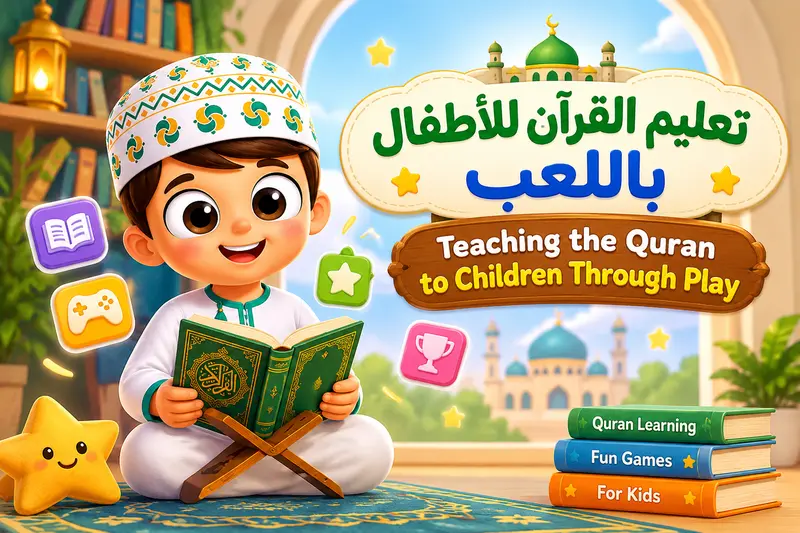
Turning Quran learning into an enjoyable experience through play can help children develop a love for the Holy Quran and make learning and memorization easier and more engaging. Interactive activities, stories and games give children opportunities to participate, explore and connect with Quranic verses in ways that suit their age and interests.
Storytelling and Role-Playing Game
Choose a story from the Quran, such as the story of Prophet Yusuf (Joseph) or the People of the Cave, and assign suitable roles to the children according to their ages. Each child can act out part of the story while listening to and reading the related Quranic verses under adult supervision.
This activity helps children understand Quranic stories and remember their lessons. It is important to present the stories respectfully, preserving the sanctity of the Holy Quran and distinguishing between acting out story events and reciting Quranic verses.
Tips for Parents and Teachers
- Start with simple lessons: Choose short Surahs and age-appropriate verses to help children build confidence and experience progress.
- Keep sessions short: Ten to fifteen minutes of daily learning and revision can be more effective than one long session that may lead to boredom.
- Use small rewards: Encourage children with stickers, stars or an enjoyable activity when they achieve a small goal.
- Involve children in planning: Let them choose their favourite game or activity and take part in setting their learning goals.
- Revise regularly: Set aside time to review previously learned Surahs. You can also organize a group game involving the whole family.
Combining Technology with Play
Smartphone and tablet apps offer different ways to support Quran learning for children, including listening to recitations, repeating verses, interactive activities and educational games. These tools can make learning more varied and help children listen, memorize and revise at their own pace.
When choosing a Quran learning app for children, make sure its content is reliable and age-appropriate and that it provides a safe, simple user experience. Parents should also take part in choosing the app and supervising how their children use it.
Dawood Kids: An App and Educational Content for Quran Learning
Dawood Kids brings together Quranic content, games and educational activities to encourage children to learn and interact. The app also offers different modes for listening to and revising Quranic verses, helping children choose an approach that suits their learning and memorization needs.
Parents can combine app activities with games and learning activities at home, making Quran learning an enjoyable part of their children's daily routine.
Tracking Your Child's Quran Learning Progress
Keep a simple record of the Surahs your child has learned, the verses that need revision and the activities they enjoy. Review this record together regularly, focusing on encouraging their effort rather than simply counting how many Surahs they have memorized.
Tracking progress helps identify what your child has mastered and what needs more practice. It can also give children a sense of achievement and motivate them to continue learning.
Play is more than entertainment. It can be an effective way to learn and help children develop a love for the Holy Quran.
Conclusion
Teaching the Quran to children through play does not mean diminishing the importance or sanctity of the Holy Book. It means choosing educational approaches that suit children's natural interests and learning styles. Stories, interactive activities, short sessions and regular revision can make the Quran learning journey more enjoyable and consistent.
Start with a simple activity that suits your child's age, take part in their learning journey and make listening to and revising the Quran a meaningful part of their daily routine.



Customer reviews
No reviews
Write your review
Your comment will appear after it is reviewed and approved.