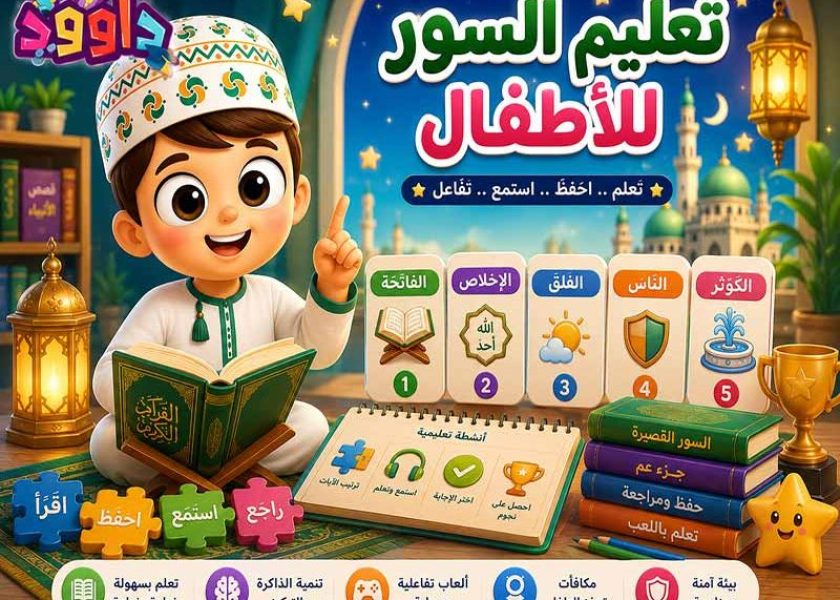
Teaching Quran Surahs to children is one of the most meaningful gifts parents can give their children. The Holy Quran is not only a book to memorize; it is a source of guidance that helps build faith, good manners and positive values from an early age.
With different modern learning methods, parents can introduce short Quran Surahs through listening, repetition and interactive activities. These approaches can make memorization easier and help children develop a positive connection with the Holy Quran.
In this article, we explore effective ways to teach Quran Surahs to children, which Surahs are suitable for beginners, and how educational games can make learning and revision more enjoyable.
Why Start Teaching Quran Surahs at an Early Age?
Young children are often quick to learn languages, imitate sounds and remember words. This makes early childhood a suitable time to introduce them to the Holy Quran and short Surahs, provided that learning activities match their age and attention span.
Parents can begin by listening to Quranic recitations with their children and gradually encouraging them to repeat short words or verses. The most important thing is to make learning a calm and enjoyable experience without forcing children or expecting more than they can manage.
When listening to and revising the Quran becomes part of a child's daily routine, they can grow up feeling connected to the Holy Book and become familiar with regular Quran learning.
Best Surahs for Children to Start With
Many parents prefer to begin with short and familiar Surahs, taking the child's pronunciation and memorization abilities into consideration. Some suitable Surahs include:
- Surah Al-Fatihah.
- Surah Al-Ikhlas.
- Surah Al-Falaq.
- Surah An-Nas.
- Surah Al-Kawthar.
- Surah Al-Asr.
- Surah Quraysh.
- Surah Al-Fil.
- Surah Al-Ma'un.
- Surah Al-Kafirun.
Many children begin with Surah Al-Fatihah because of its importance in daily prayers. Parents can then introduce other short Surahs according to the child's level. Once these Surahs are memorized, children can gradually move on to longer ones while continuing to revise what they have already learned.
Effective Ways to Teach Quran Surahs to Kids
1. Daily Listening to Quran Recitation
Listening to accurate Quranic recitation is an important step in teaching children the Quran. It helps them become familiar with pronunciation, the articulation of Arabic letters and the correct rhythm of verses.
Parents can set aside a short period to listen to the Surah together with their child, choosing a clear recitation that is suitable for repeated listening.
2. Gradual Repetition
Repetition is one of the basic methods for strengthening memorization. Parents can divide a Surah into short verses or sections and repeat each part several times before moving on to the next.
After practising the individual sections, the child can listen to the entire Surah and try to recite it, returning to the parts that need more revision.
3. Learning Through Play
Reviewing Surahs can be turned into simple educational activities that encourage children to participate, such as:
- Arranging sections of a Surah in the correct order.
- Matching the beginning of a verse with its continuation.
- Choosing the correct name of a Surah.
- Taking part in simple quizzes about previously learned Surahs.
- Trying short daily revision challenges suitable for their level.
These activities introduce variety into the learning process and make revision less repetitive and more engaging.
4. Using Suitable Visual Learning Materials
Educational cards and simple visual materials can attract children's attention, especially during the early stages of learning. Parents can use cards showing Surah names or illustrated activities related to suitable educational topics.
It is important to keep Quranic text clear and respectful and avoid using images or effects that distract children from listening and learning.
5. Encouragement and Simple Rewards
Children need encouragement to feel that their efforts are appreciated. Parents can reward them with praise, a sticker or a simple certificate when they complete a Surah or make progress in memorization.
Rewards should be used as a way to encourage children, not as a condition for memorizing the Quran. The goal is to help them develop a genuine love for learning and a desire to continue.
How Educational Games Help Children Memorize Surahs
Educational games give children opportunities to interact with what they are learning instead of only listening and repeating. They can support memorization and revision through activities such as:
- Breaking Surahs into sections: Learning through short, gradual steps.
- Listening and repeating: Hearing verses and then trying to recite them.
- Short questions: Remembering Surah names or the order of what has been learned.
- Interactive revision: Revisiting previously learned Surahs through different activities.
- Gradual learning: Moving on to new Surahs when the child is ready.
However, the accuracy of Quranic text and recitation should always be more important than the appearance of a game or the number of rewards it offers.
Mistakes to Avoid When Teaching Quran Surahs to Children
Some teaching methods can make children feel bored or pressured. Parents should try to avoid the following mistakes:
- Forcing children to memorize: Pressure may make them dislike learning sessions.
- Teaching too many verses at once: It is better to divide memorization into smaller sections.
- Ignoring revision: Learning a new Surah does not mean stopping the revision of previous ones.
- Comparing children with others: Every child has their own learning pace and abilities.
- Using punishment: Quran learning should be associated with encouragement and reassurance, not fear.
- Focusing only on memorization: Children should also become familiar with the meanings of Surahs in ways appropriate for their age.
How to Help Your Child Love the Quran
Parents can help children build a positive relationship with the Quran through simple and consistent habits:
- Read the Quran with your child and make it part of your family routine.
- Listen to Quranic recitation together at suitable times.
- Use educational games and activities to maintain their interest.
- Praise their efforts and encourage every step of progress.
- Set aside a regular, short time for learning and revision.
- Celebrate small achievements without putting pressure on the child.
Children can also develop an interest in the Quran naturally when they see their parents reading it and making it part of everyday family life.
Dawood Kids: Listening, Memorization and Revision
Dawood Kids offers an experience that combines Quranic content, games and educational activities to encourage children to learn and interact in an enjoyable way.
Children can use different Quran learning modes in the app:
- Normal Mode: For listening to and following Quranic recitation.
- No Repetition Mode: For listening to verses without repeating them.
- Memorize Mode: To support memorization practice and verse revision.
The app also brings together Quranic content, games and educational sections, with support for Arabic and English. Parents can combine its use with daily listening, reading and revision activities according to their child's age and learning level.
Daily Tips for Parents
To make learning Surahs a positive and regular habit, parents can follow these suggestions:
- Set aside a short daily learning period based on the child's attention span.
- Start with one Surah or a small section of a Surah.
- Revise previously learned Surahs before introducing new material.
- Make listening and repetition part of the daily routine.
- Join your child in educational activities and offer regular encouragement.
- Use patience and positive reinforcement instead of pressure or comparisons.
Conclusion
Teaching Quran Surahs to children does not require complicated methods. It requires patience, consistency and learning activities that match the child's age and abilities. Listening, repetition, revision and interactive activities can make the Quran learning journey easier and more enjoyable.
When learning is combined with encouragement and family support, memorizing the Quran becomes a positive experience that helps children develop a connection with the Holy Book from an early age.
Through Dawood Kids and its Quran educational content, families can introduce a digital learning tool that supports listening, memorization and revision through an experience that combines education and enjoyable activities.
Frequently Asked Questions About Teaching Quran Surahs to Kids
What is the best age to start teaching Quran Surahs to children?
Children can be introduced to the Quran and short Surahs from an early age through listening and simple activities. Learning should always match their attention span and understanding, without turning memorization into a source of pressure.
Which Surah should a child learn first?
Many children start with Surah Al-Fatihah, followed by short Surahs such as Al-Ikhlas, Al-Falaq, An-Nas and Al-Kawthar, depending on their learning level and memorization abilities.
Can educational games help children memorize Surahs?
Yes. Educational games can support memorization and revision through repetition, questions and interactive activities. However, they do not replace listening to accurate recitation or guidance from parents and teachers.
How much time should a child spend memorizing Quran Surahs each day?
The suitable duration varies from one child to another. It is best to begin with short sessions that match the child's attention span and focus on consistency and revision rather than setting a large daily memorization target.



Customer reviews
No reviews
Write your review
Your comment will appear after it is reviewed and approved.